13 Aug 2024 |
New guidance for accessible and inclusive facilities
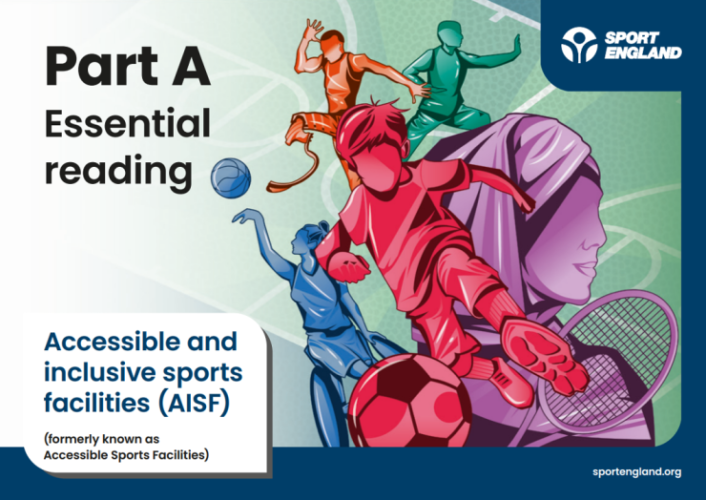
Sport England have produced new guidance to help ensure sport and leisure facilities are safe, welcoming and accessible to all.
Aimed at planners, architects, building owners and operators, Accessible and inclusive sports facilities (AISF) guidance encourages the design of spaces that reduce or remove barriers to being more active.
That includes creating and maintaining facilities that are accessible to disabled people and meet the needs of our vibrant and diverse communities, such as those related to faith, sex, sexuality and gender identity.
The document is the current standard in this area, replacing previous Accessible Sports Facilities Design Guidance, originally published in 2010.
Its expanded title and content are reflective of a broader, more nuanced approach to inclusion – another step in the long-term Uniting the Movement vision of unlocking the advantages of sport and physical activity for everyone.
In the introduction to the guidance, our director of equality, diversity and inclusion in sport, Viveen Taylor, writes:
"The built environments where movement and physical activity take place can sometimes be a person’s biggest barrier to being more active.
"This guidance provides the technical Information needed to ensure that our facilities are not just functionally accessible but intuitive, inviting, and capable of both attracting and meeting the needs of our increasingly diverse communities."
While the guidance seeks to ensure new and existing sports facilities meet the requirements of the Equality Act (2010), it also promotes a proactive approach to identifying community needs and removing potential barriers, rather than solely meeting minimum statutory standards.
It draws upon recognised best practice examples for accessibility and wider inclusion, and aims to increase awareness and use of these inclusive design principles:
- Placing people at the heart of the design process to reflect the needs of the community.
- Acknowledging diversity and difference to help make everyone feel welcome, safe and without anxiety.
- Offering choice where a single design solution cannot accommodate all users.
- Providing for flexibility in use.
- Providing convenient and enjoyable environments for everyone to use with dignity and privacy.
In producing AISF, it incorporated feedback and comments from more than 80 stakeholders, including government departments and agencies, access and inclusion organisations, national governing bodies, framework consultants and staff.
It has resulted in robust and diverse guidance covering a range of areas essential to the design and operation of accessible and inclusive sports facilities, including changing and toilet provision, wayfinding and signage, and emergency evacuation.
The guidance is available as a series of accessible documents.
What's new

Press
Women's football could come home to Millmoor under ambitious…
A bold new vision could see one of South Yorkshire's most iconic sporting venues brought back to…
20 Oct 2026

Press
#PlanetPossible podcast: can sport drive climate action?
Can sport inspire communities to take action on climate and sustainability? That's the question at…
14 Oct 2026

Funding
Sport England responds to the 'Fund what matters to you'…
The National Lottery plays a vital role in supporting community sport and physical activity. Our…
13 Oct 2026
Read more news, funding, jobs, courses and events